The Danger of Interstitial Ads in QR Technology
Executive Summary
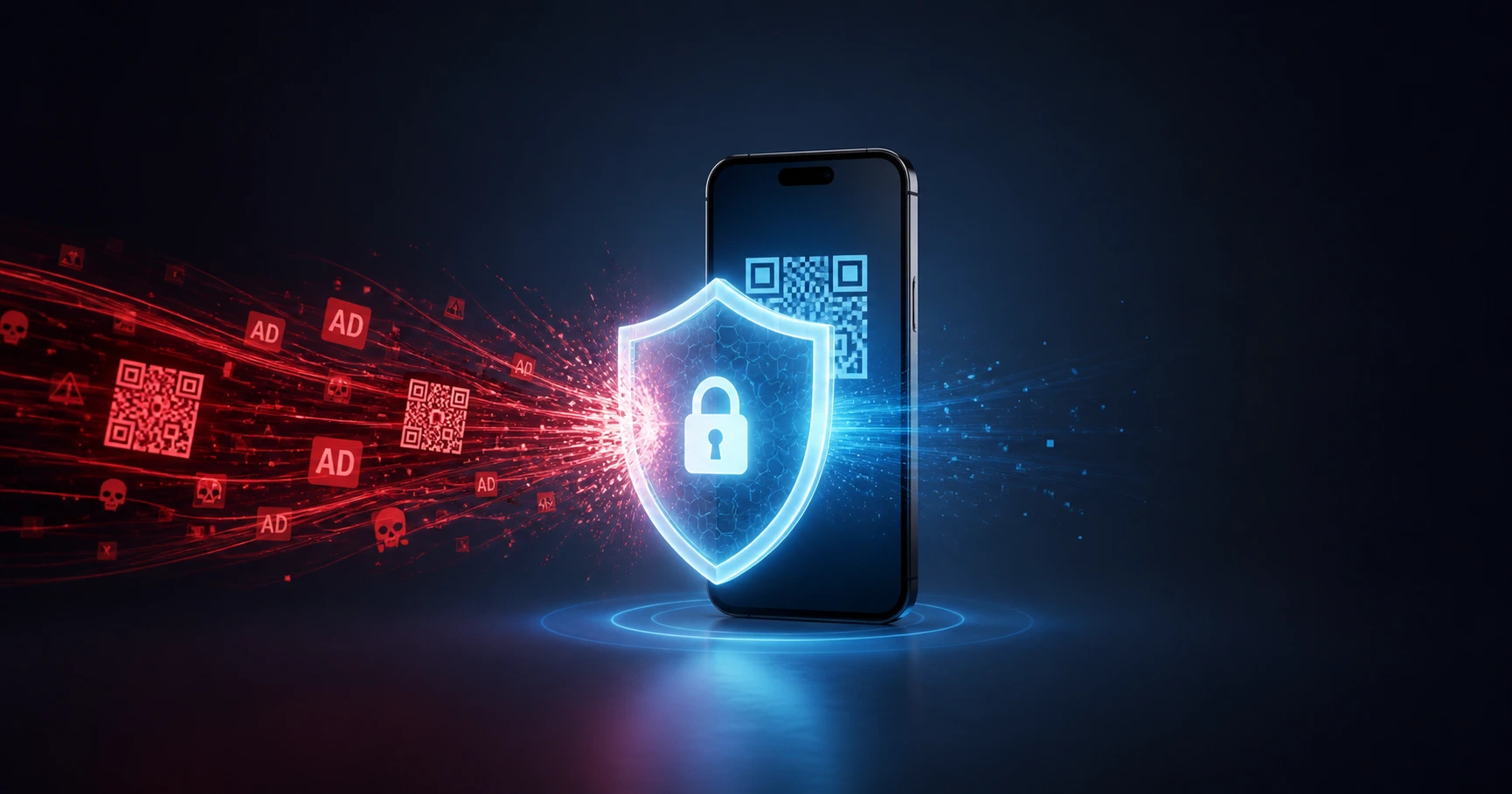
Interstitial ads in QR redirects introduce third-party vulnerabilities that can hijack the customer journey. Maintaining brand safety requires a strict zero-ad policy to ensure users are routed directly to their destination without malicious interception or frustrating latency.
What Are Interstitial Ads in QR Redirects?
Interstitial ads are full-page promotional screens that force a user to wait or click through before reaching their intended digital destination. In the context of QR technology, these ads are injected by the redirect server of a free generator. When a user scans the physical code, their device is temporarily routed to a monetized domain instead of the brand's actual website. This fundamentally breaks the seamless physical-to-digital bridge, creating friction and user frustration. QRhub eliminates this entirely by operating on a strict zero-ad policy across all tiers, guaranteeing that users experience an unbroken path to your content.
How Ad-Injected Redirects Compromise Brand Safety
When you rely on an ad-supported routing engine, you forfeit control over the initial user experience. The third-party network dictates which ads are displayed to your customers during the redirect phase. This can result in your scanning users being shown advertisements for direct competitors or inappropriate content entirely misaligned with your corporate messaging. To preserve professional integrity, the routing architecture must remain pristine. Utilizing a dedicated service that absolutely prohibits injected ads or hidden redirects ensures that the first interaction your customer has is with your brand alone.
The "Quishing" Threat Multiplier
QR phishing, or "quishing," typically relies on tricking users into scanning a malicious barcode. However, ad-injected redirects act as a threat multiplier even on legitimate codes. If the third-party ad network utilized by a free QR generator is compromised, attackers can serve malicious payloads or deceptive prompts via the interstitial page. Users, assuming the prompt is part of the brand's intended experience, may unknowingly download malware or surrender credentials. Removing the middleman and minimizing hops in the routing process drastically reduces the available attack surface.
Why a Zero-Ad Policy is a Security Requirement
Corporate security demands architectural transparency. A zero-ad policy is not merely a user experience preference; it is a fundamental security requirement that prevents unauthorized code execution during the redirect. QRhub secures this transition by routing all traffic through a Global Edge Infrastructure. By deploying links to hundreds of cities simultaneously without any injected tracking or ad scripts, the redirect is completed with millisecond response times and zero latency. This rapid, direct routing ensures 100% uptime and prevents any opportunity for third-party interception.
Explore the Security Cluster

Try QRhub for free
Generate a professional-grade QR code with zero signup and zero funny business. Every generation includes our premium 8-piece high-resolution kit.
Related Questions
Why do some QR codes show ads before the destination website?
Many free QR code generators monetize their services by routing users through an ad network before the final destination. While this keeps the generation free, it compromises the user experience and introduces security vulnerabilities. QRhub operates on a strict zero-ad policy, ensuring direct routing on all tiers without interstitial delays.
Can interstitial ads lead to malware?
Yes, if the third-party ad network serving the interstitial page is compromised, it can serve malicious prompts or auto-download malware to the scanning device. Utilizing a professional solution with a Global Edge Infrastructure and no ad injections, like QRhub, eliminates this third-party risk.