A/B Testing the Physical World: Agile Marketing with Dynamic Codes
Executive Summary
Dynamic QR codes transform static physical assets into agile testing environments. By instantly updating destination URLs without reprinting, marketers can run real-time A/B tests on physical storefronts, billboards, and direct mail to optimize conversion rates on the fly.
What is Physical A/B Testing?
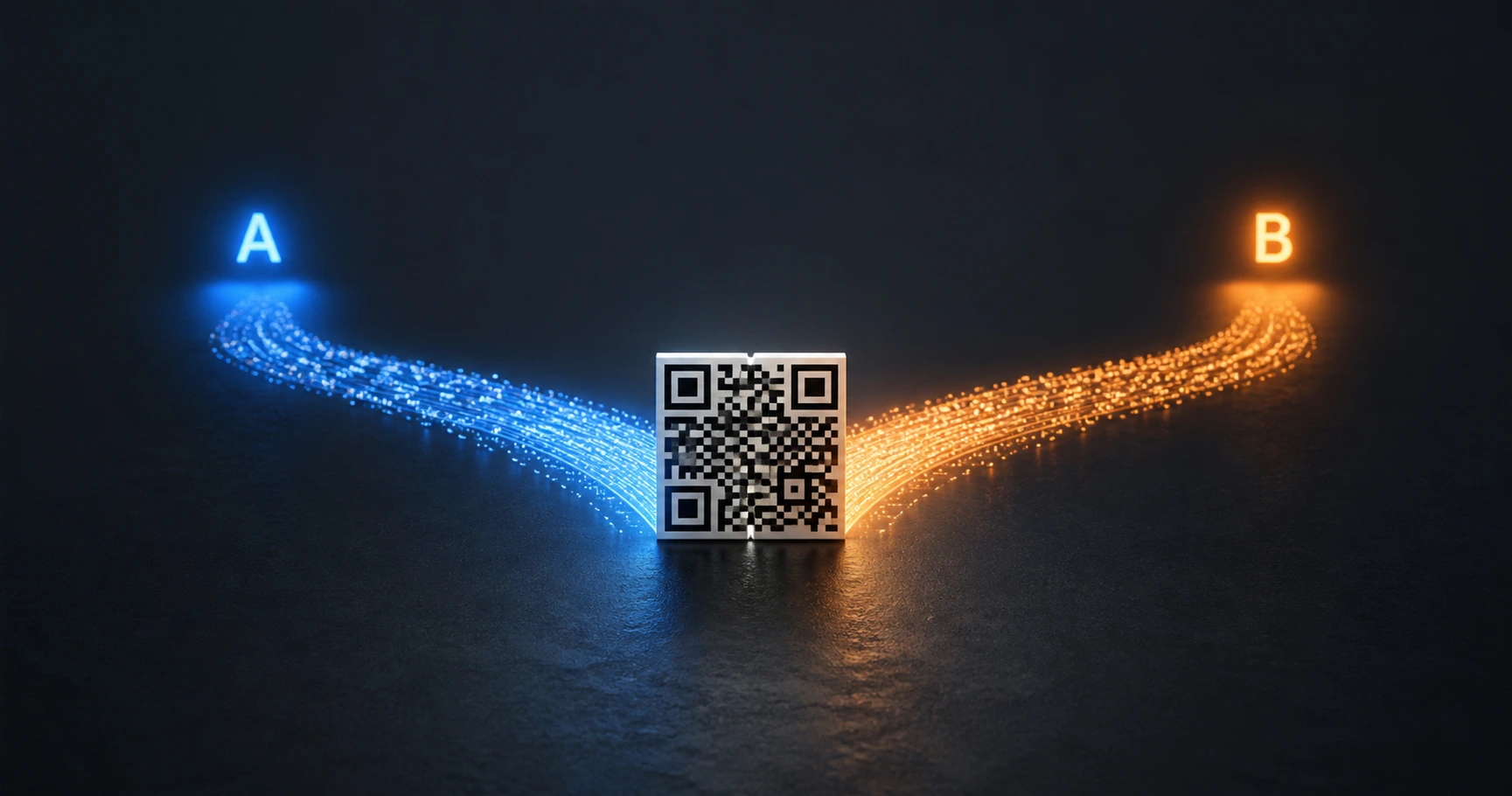
Physical A/B testing involves directing offline audiences to different digital experiences to measure which yields higher engagement or conversion. Historically, testing print media was impossibly expensive; you had to print two entirely different sets of flyers or billboards and manually track the sales lift. Today, dynamic QR codes serve as a real-time router. A single, universally deployed physical code can be redirected on the backend to point to "Landing Page A" on Monday and "Landing Page B" on Tuesday. This completely removes the operational cost of reprinting, allowing marketing teams to treat offline assets with the same analytical rigor as digital ad campaigns.
The Power of Instant Redirection
The core mechanic of an agile physical test is the redirect engine. When a brand decides to pivot a promotion mid-campaign—perhaps changing a 10% discount offer to a "Free Shipping" offer—the physical QR codes in store windows remain unchanged. Marketers simply update the destination URL in their QRhub Premium dashboard. Because QRhub utilizes a Global Edge Infrastructure, this update propagates to hundreds of cities simultaneously. The next customer who scans the code instantly sees the new offer with zero latency, ensuring the A/B test is conducted seamlessly.
Maintaining Clean Tracking Parameters
A successful A/B test requires flawless data attribution. However, stacking third-party link shorteners and aggressive UTM parameters inside a QR code can create redirect chains that destroy load speeds and trigger security warnings. To maintain an agile testing environment, the initial QR routing must remain direct. QRhub captures the initial scan data at the edge without adding extra tracking hops. You can append your specific A/B tracking data (like UTM tags) directly to the final destination URL. This ensures your URLs remain clean and fast while seamlessly populating your analytics dashboard.
Scaling Tests Across Multiple Locations
Enterprise retailers often need to test variables across different geographic regions. Using dynamic codes, a franchise can deploy identical printed signage nationwide but route scans dynamically based on the active campaign for that specific week. If a test proves successful in one region, the winning destination URL can be instantly rolled out globally to all existing physical codes. This methodology transforms static print into a flexible digital interface, maximizing the ROI of physical deployments while relying on the "Forever Active" guarantee that these dynamic links will never expire.
Explore the Strategy Cluster

Try QRhub for free
Generate a professional-grade QR code with zero signup and zero funny business. Every generation includes our premium 8-piece high-resolution kit.
Related Questions
Do I need to print different QR codes to run an A/B test?
No, that is the primary benefit of dynamic QR codes. You print one single code on your physical materials and change the destination URL in your dashboard to split test different landing pages over time. With QRhub's premium dynamic solutions, you can edit these destinations instantly without incurring any reprint costs.
Will changing the destination URL break my existing printed codes?
Not if you use a high-quality dynamic QR generator. The physical pattern of a dynamic QR code encodes a short redirect link, not the final destination. Changing the final destination updates the routing logic on the backend, leaving the physical code perfectly intact and functional. QRhub's Global Edge Infrastructure ensures these updates happen instantly with zero downtime.