Why 'Clean' URLs Matter: Avoiding Redirect Chains in Physical Marketing
Executive Summary
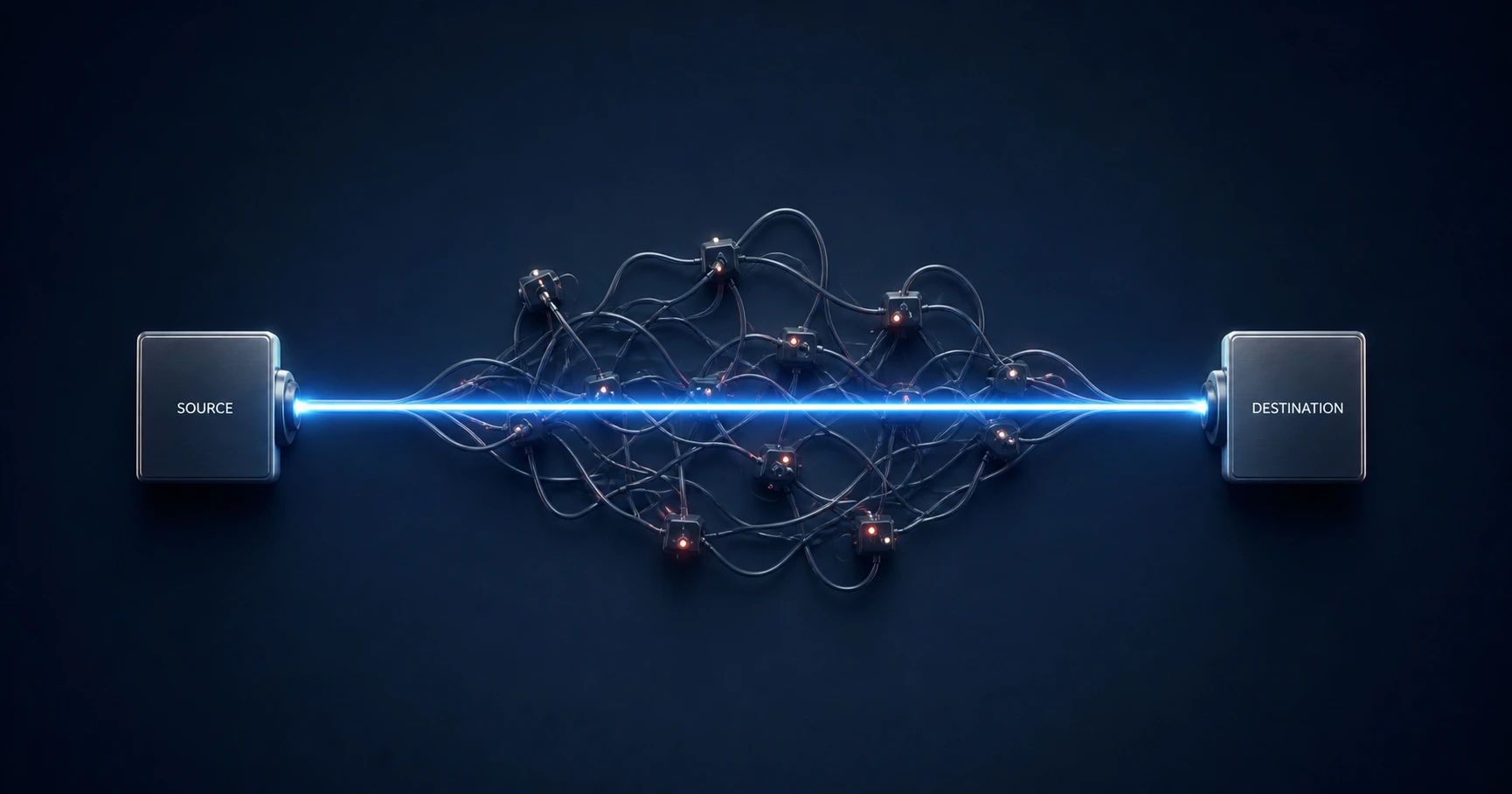
A QR code is only as fast as its routing architecture. Sending users through multiple tracking hops or ad networks creates redirect chains that drastically increase load times and lead to scan abandonment. Utilizing edge-based, direct routing ensures an instantaneous physical-to-digital transition.
What is a Redirect Chain?
A redirect chain occurs when a single URL automatically forwards to another URL, which then forwards to yet another, before finally landing on the intended page. In physical marketing, this often happens when marketers stack multiple tracking tools—such as encoding a dynamic QR link that points to a third-party link shortener, which then points to a complex UTM-tagged destination. It can also be caused by ad-networks injecting interstitial pages into the routing flow. Every "hop" in this chain requires the smartphone to send and receive a fresh server request. This tangled web of DNS lookups adds critical milliseconds, or even full seconds, of latency to the user experience.
The Cost of Latency in Retail Environments
In a physical retail environment, cellular reception is often compromised by building materials, metal shelving, and dense store layouts. When a customer scans a code, they expect an instantaneous transition from the physical display to their digital screen. If a redirect chain forces their phone to ping three different servers across the country on a weak 4G connection, the resulting blank white screen creates immediate friction. Studies consistently show that even a one-second delay in mobile load times causes a significant drop in conversion rates. To maintain customer engagement, the digital bridge must be completely seamless and free of unnecessary bloat.
Preserving Brand Trust with Direct Edge Routing
Beyond speed, complex redirect chains look highly suspicious to modern mobile browsers and corporate firewalls, often triggering security warnings or blocking the page entirely. A clean, direct route preserves the professional integrity of your brand. QRhub eliminates unnecessary hops by deploying dynamic links across a Global Edge Infrastructure. When a user scans your code, they are routed by the server physically closest to them directly to your destination URL. Coupled with a strict zero-ad policy—meaning no interstitial screens or injected third-party tracking scripts—this architecture ensures millisecond response times and a flawless, secure customer journey.
Explore the Strategy Cluster

Try QRhub for free
Generate a professional-grade QR code with zero signup and zero funny business. Every generation includes our premium 8-piece high-resolution kit.
Related Questions
Can I use third-party link shorteners with my QR codes?
While technically possible, adding a third-party link shortener (like Bitly) inside a dynamic QR code creates an unnecessary redirect hop that slows down loading times. QRhub's dynamic solutions utilize a built-in, edge-optimized routing engine, eliminating the need for external shorteners and keeping your URLs clean and fast.
How do I track campaigns without creating redirect chains?
The most efficient method is to append tracking data (like UTM parameters) directly to the final destination URL before generating the QR code. QRhub captures the initial scan data at the edge without adding extra tracking hops, while your destination URL's UTMs seamlessly populate your analytics dashboard.